


Architectural Hardware Specification Guide: Should Commercial Spaces Use Mortise Locks or Cylindrical Locks?
Table of Contents
1. Introduction: The Hidden Costs of Choosing the Wrong Door HardwareIn the design process for commercial spaces, corporate headquarters, healthcare facilities, and hospitality projects, door hardware is often addressed toward the end of the material specification process. However, when the selected hardware does not match the actual intensity of use, a series of costly problems can follow: 1. Rising operation and maintenance costs
Underestimating traffic volume can cause internal lock mechanisms to fatigue within just a few months, resulting in sagging lever handles or jammed locks.
2. Damage to the door leaf
Repairing existing openings or modifying a door leaf to accommodate a different hardware specification can compromise the door’s structural integrity and fire-rating certification. Labor and material costs may ultimately exceed the initial procurement savings.
3. Code compliance and inspection issues
If the hardware does not meet the required durability tests or accessibility requirements for commercial spaces, the project may face reinspection, delayed handover, and additional corrective work.
To balance project budgets with long-term performance, it is essential to understand the fundamental differences between mortise locks and cylindrical locks, as well as the applications for which each type is best suited. 2. Understanding ANSI/BHMA Lock Grades: The Commercial BaselineWhen preparing a hardware schedule, the ANSI/BHMA classification system—developed by the American National Standards Institute and the Builders Hardware Manufacturers Association—is one of the most widely recognized benchmarks for lock durability. Grade 1: Heavy-Duty Commercial
Grade 2: Standard-Duty Commercial
Grade 3: Residential Only
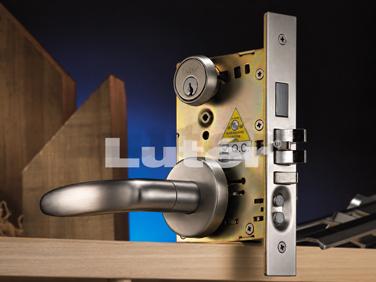
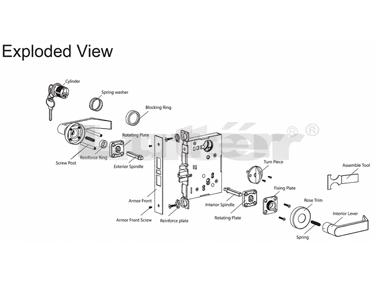
3. Mortise Locks: The Standard for High-Traffic and High-Security ApplicationsConstruction and InstallationA mortise lock requires a precisely milled mortise pocket along the edge of the door. The large, steel-enclosed lockcase is then fully recessed into the door leaf. Key components typically include:
【Features of the Embedded Door Lock Structure】
  Key Advantages1. Exceptional mechanical durability
Most commercial mortise locks meet the ANSI Grade 1 standard. Their larger springs, levers, and heavier steel components are designed to withstand thousands of high-intensity operations every day. 2. Enhanced security and resistance to forced entry
The deadbolt commonly projects approximately 1 inch, or 25.4 mm, and may incorporate hardened anti-saw pins. Because the cylinder is secured directly within the lockcase, mortise locks generally offer stronger resistance to prying and physical attack than cylindrical locks. 3. Greater functional integration
Mortise lock bodies can support a wide range of integrated functions, including:
Planning Considerations
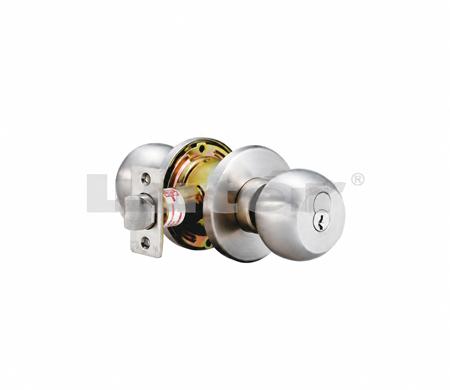
4. Cylindrical Locks: A Versatile, Time-Efficient Solution for Light Commercial UseConstruction and InstallationCylindrical locks—also commonly referred to as tubular locks or lever-handle cylindrical locks—use a standardized cross-bore installation method. The installation typically involves:
Key components include:
【Features of the Collet Lock Structure】
 Key Advantages1. Standardized preparation and rapid installation
Because manufacturers worldwide generally follow standardized door-preparation dimensions, cylindrical locks can be factory-prepped efficiently and installed or replaced in only a few minutes. 2. High interchangeability between brands
Most brands follow common backset dimensions, typically 60 mm or 70 mm. Future repairs and replacements can therefore be completed without modifying the door leaf. 3. Excellent cost efficiency
For applications requiring Grade 2 performance, cylindrical locks can significantly reduce the project’s overall hardware budget while still providing reliable everyday operation. Limitations and Planning Considerations
5. Mortise vs. Cylindrical Locks: A Comprehensive Comparison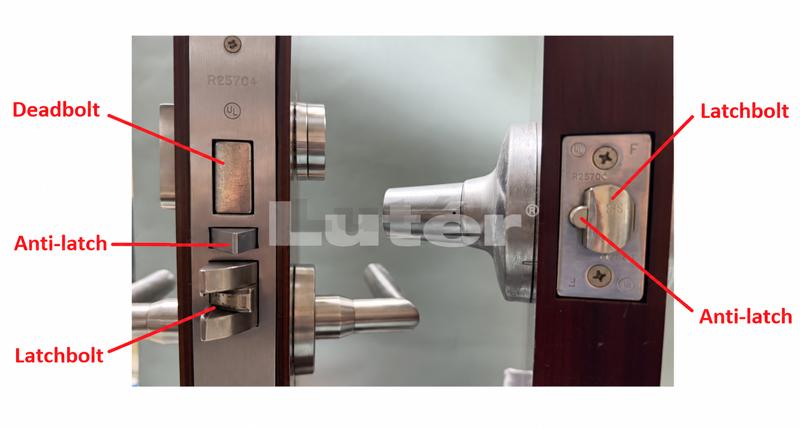
6. Project Selection Guide: Choosing the Right Hardware for Each SpaceWhen preparing a hardware schedule, divide the project according to usage frequency and access-control requirements. Spaces Best Suited to Mortise LocksMain entrances and smoke-control doors at commercial buildings
These doors may experience thousands of operations each day and require long-term fatigue resistance.
Guestroom doors in luxury hotels and hospitality facilities
These applications require quiet operation, single-action egress, and a refined appearance.
Equipment rooms, archive rooms, vaults, and executive offices
These are controlled areas with strict requirements for pry resistance and physical security.
Spaces Suitable for Commercial Cylindrical LocksStandardized leased offices and interior partitions
These spaces may undergo frequent tenant changes and require quick cylinder or hardware replacement.
Meeting rooms, pantries, and employee storage rooms
These areas typically have moderate usage and require basic passage control or privacy.
Standard classrooms and cram schools
These are budget-conscious applications that must still comply with accessibility requirements for lever handles.
7. Lifecycle Management and Replacement Cycles for Commercial Door HardwareEven high-grade hardware can become a safety concern without regular inspection and maintenance. A poorly maintained lock may obstruct emergency evacuation or prevent a door from operating properly. Recommended Inspection and Replacement ScheduleAnnual inspection
Inspect the following items once a year:
Recommended replacement cycle
8. Frequently Asked Questions About Architectural Hardware PlanningQ1: Will creating a mortise pocket weaken the door or affect its fire-rating performance?
Not when the work is carried out using approved methods and in accordance with the door manufacturer’s requirements. Certified fire-rated wood doors and steel doors are typically manufactured with reinforced internal plates or dedicated lock boxes. When used with UL- or CNS-certified mortise lock bodies and approved intumescent strips, the installation should not compromise the door’s structural integrity or fire-rating duration. Q2: What type of lever is required under accessibility regulations such as the ADA?
Traditional round knobs should not be used. Lever handles are required. Whether the door uses a mortise lock or a cylindrical lock, operating hardware in commercial and public spaces should be operable with one hand, without tight grasping, pinching, or wrist twisting. For example, accessibility requirements may limit operating force to less than 5 pounds. Q3: Can an existing cylindrical lock be upgraded directly to a mortise lock?
It is technically possible, but labor and repair costs can be substantial. A cylindrical lock typically leaves a large 54 mm bore in the door face. When converting to a mortise lock, the new escutcheon must be large enough to cover the existing opening, while the edge of the door must be milled to create a new mortise pocket. Unless the project has specific high-security requirements, upgrading to a heavy-duty Grade 1 cylindrical lock is often the more practical solution. Project Hardware Specification Consulting and Technical SupportIf you are planning door-control systems for a public space, corporate headquarters, healthcare facility, or hospitality project, contact our hardware technical team for product information, hardware scheduling recommendations, and ANSI/BHMA certification catalogs. |
||||||||||||||||||||||||||||
|
|
TEL : +886-4-22479015 FAX : +886-4-22414361
Mail : louischou@luter.com.tw